


Did you know that approximately 33% of individuals over the age of 65 struggle with the persistent discomfort of bunions? If you're among them, you understand how the sharp pain during a simple walk or the constant struggle to find comfortable shoes can diminish your quality of life. It's common to feel a sense of anxiety as the deformity progresses, but you don't have to manage this alone. Finding effective bunion pain relief is about more than just temporary fixes; it's about reclaiming your mobility and confidence.
This guide provides a methodical path toward recovery. You'll discover a range of strategies, from immediate at-home remedies for inflammation to the latest advancements in scarless, painless surgical techniques. By understanding the transition from conservative care to permanent solutions, you can make informed decisions that prioritize your long-term health. Let's explore how modern medicine bridges the gap between managing daily pain and achieving lasting results.
Key Takeaways
- Learn how to manage acute flares using the methodical RICE protocol and localized anti-inflammatory applications for immediate bunion pain relief.
- Understand the structural importance of custom-molded orthotics in stabilizing the midfoot and preventing the progressive worsening of foot deformities.
- Discover how advanced surgical techniques and modern anesthesia protocols have evolved to prioritize a painless recovery and superior clinical outcomes.
- Explore the transformative potential of scarless surgery, which utilizes minimally invasive methods to correct the root cause of bunions without visible scarring.
Immediate Bunion Pain Relief: Managing Inflammation at Home
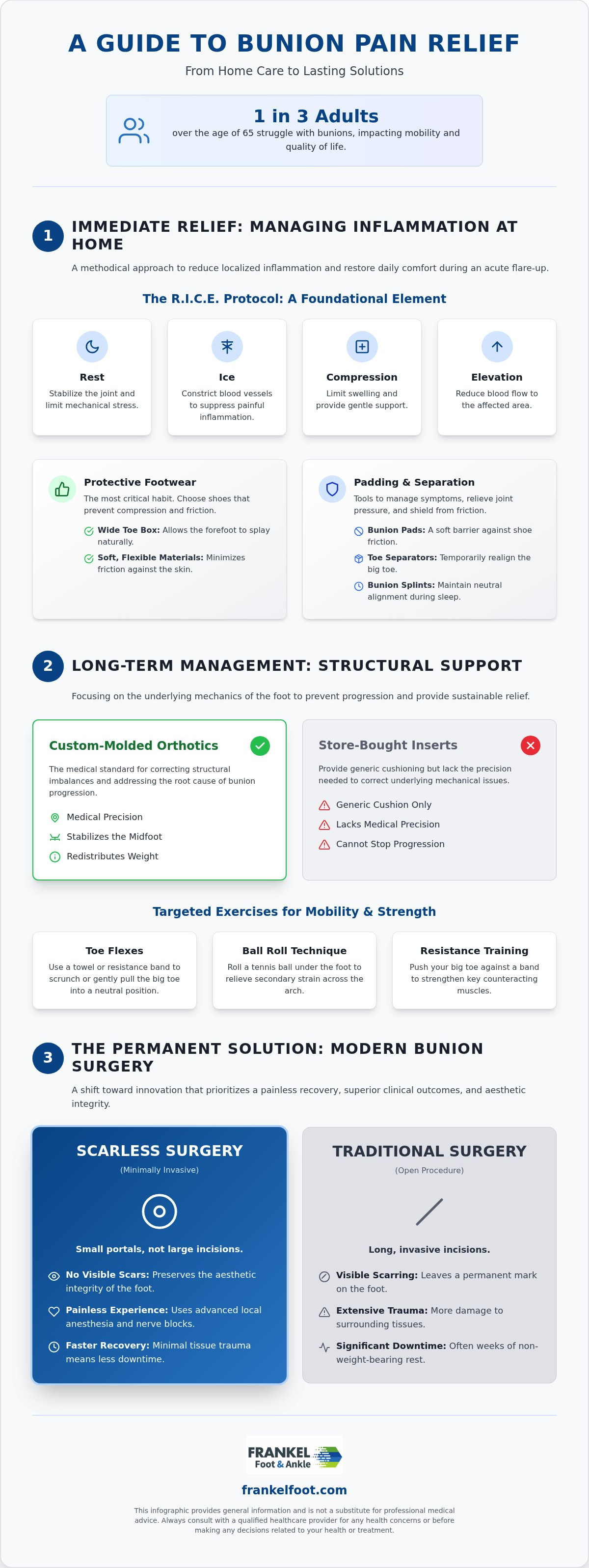
Managing an acute flare requires a methodical approach to reduce localized inflammation and restore daily comfort. The RICE protocol (Rest, Ice, Compression, and Elevation) remains a foundational element of conservative care. It helps stabilize the affected joint and limits the physiological response to mechanical stress. For effective bunion pain relief, many patients also rely on non-steroidal anti-inflammatory drugs or topical analgesic gels to interrupt pain signals and mitigate swelling. Icing serves as a vital physiological tool, as the targeted cold therapy constricts blood vessels to suppress the painful inflammation of the bursa sac often triggered by mechanical friction.
Selecting appropriate footwear is the most critical habit you can adopt to protect your feet. A wide toe box provides the necessary volume for the forefoot to splay naturally, preventing the lateral compression that exacerbates the deformity. When you understand what a bunion is, it becomes clear that reducing external pressure is essential for preventing the condition from worsening over time. Shoes with soft, flexible materials further minimize friction against the skin while you walk.
Protective Padding and Toe Separation Techniques
Non-medicated bunion pads act as a soft, protective barrier that shields the medial eminence from the constant friction of shoe leather. While pads address external irritation, toe separators work internally by temporarily realigning the hallux to relieve joint pressure and redistribute weight. For those seeking relief after a long day, bunion splints can help maintain a more neutral alignment during sleep. These tools offer a compassionate way to manage symptoms, though they don't replace the need for professional evaluation as the deformity progresses.
Long-Term Management: Structural Support and Foot Strengthening
While immediate remedies address surface-level symptoms, long-term bunion pain relief requires a focus on the underlying mechanics of the foot. Store-bought inserts often provide a generic cushion, but they lack the medical precision needed to correct structural imbalances. Custom-molded orthotics are designed to stabilize the midfoot, effectively redistributing weight and preventing the hallux from drifting further out of alignment. This structural support is a vital component of comprehensive foot pain relief, as it addresses the root cause of progression rather than just the temporary flare.
Active rehabilitation through foot-strengthening exercises complements these structural supports. By building the intrinsic muscles, you can maintain better control over your gait and achieve more sustainable bunion pain relief. Many patients find that consistent at-home care for bunions that includes both stabilization and movement leads to improved mobility. If you're noticing persistent changes in your walking pattern, a consultation at Frankel Foot & Ankle Center can help determine the best orthotic strategy for your specific needs.
Targeted Exercises for Bunion Mobility
Maintaining the range of motion in the first metatarsophalangeal joint is essential for a fluid, pain-free stride. You can perform these simple yet effective movements daily to support joint health:
- Toe Flexes: Place a towel on the floor and use your toes to scrunch it toward you, or use a resistance band to gently pull the big toe into a neutral position.
- Ball Roll Technique: Utilize a tennis ball or specialized massage ball to roll out the plantar fascia, which helps relieve secondary strain across the arch.
- Resistance Training: Gently push your big toe against a band to strengthen the abductor hallucis muscle, helping to counteract the inward pull of the deformity.
The Permanent Solution: Scarless and Painless Bunion Surgery
Transitioning from temporary management to a definitive resolution requires a shift toward modern surgical innovation. Scarless bunion surgery represents a significant advancement in podiatric medicine, utilizing minimally invasive portals rather than the long, invasive incisions of the past. No visible marks remain. This methodology preserves the aesthetic integrity of your foot while correcting the underlying bone alignment. For those seeking permanent bunion pain relief, this technique addresses the structural deformity directly without the extensive tissue trauma associated with older methods. Advanced local anesthesia and specialized nerve blocks ensure a "painless" experience, dismantling the common anxiety that corrective surgery requires a grueling or debilitating recovery.
Traditional open procedures often involve several weeks of non-weight-bearing rest and significant downtime. In contrast, the modern Frankel Foot & Ankle approach prioritizes immediate stability. Most patients experience a significantly accelerated recovery timeline, often returning to their favorite footwear and daily activities much faster than conventional surgery allows. This precision-based methodology offers a bridge from chronic discomfort to a lifestyle of unrestricted movement. You can explore the specific steps of this journey in our Scarless Bunion Surgery Pillar.
Why Proactive Correction Beats Chronic Pain Management
Relying indefinitely on temporary fixes often leads to secondary complications that are harder to treat. Over time, a shifting joint can cause hammertoes or localized arthritis, making professional bunion treatment essential before permanent joint damage occurs. Scarless techniques restore your natural anatomy while providing the ultimate bunion pain relief. If you're ready to move beyond daily management, our dedicated specialists in Middletown, Katonah, and Milford are prepared to assist you. Scheduling a consultation at Frankel Foot & Ankle is the final step toward reclaiming your active lifestyle.
Reclaiming Your Active Lifestyle
Achieving lasting bunion pain relief is a journey that moves from the immediate management of inflammation to the precision of structural correction. While at-home remedies and custom orthotics provide essential support, modern medical advancements offer a path toward a permanent, scarless solution. This comprehensive approach ensures that you aren't just masking symptoms but are actively restoring the health and function of your feet.
Dr. Marc Frankel and the team at Frankel Foot & Ankle specialize in sophisticated, painless surgical techniques designed to restore your mobility without the burden of traditional recovery timelines. With convenient locations in Middletown, Katonah, and Milford, our practice bridges the gap between daily discomfort and a future of unrestricted movement. You don't have to accept foot pain as a permanent part of your life. We invite you to schedule a consultation at Frankel Foot & Ankle to discuss your scarless bunion relief options. Your journey toward a pain-free life begins with a single, expert-led step.
Frequently Asked Questions
How can I get immediate relief from a bunion flare-up?
You can achieve immediate relief by applying the RICE method: rest, ice, compression, and elevation. This protocol effectively suppresses the inflammatory response in the bursa. Additionally, utilizing non-steroidal anti-inflammatory medications or topical cooling gels can help interrupt acute pain signals. These conservative measures are designed to manage the symptoms of a flare-up quickly while you consider long-term structural solutions.
Is surgery the only way to get rid of bunion pain permanently?
Yes, surgical intervention is currently the only method to permanently correct the underlying bone structure. While non-surgical strategies provide significant bunion pain relief and slow progression, they cannot realign the shifted metatarsal bone. Modern scarless techniques allow for this permanent correction with minimal downtime, bridging the gap between temporary symptom management and a lasting, pain-free recovery.
What kind of shoes are best for bunion pain relief?
The best footwear features a wide, anatomical toe box that allows your forefoot to splay naturally without lateral compression. Look for shoes made from flexible, breathable materials like soft leather or mesh to minimize friction against the bony prominence. Avoiding high heels and narrow, pointed styles is essential to prevent the mechanical stress that exacerbates joint inflammation and deformity.
Can bunion exercises actually reverse the deformity?
No, foot exercises cannot reverse the physical bone misalignment, but they are vital for maintaining joint flexibility and muscle strength. Targeted movements like toe flexes and towel curls help stabilize the midfoot and improve gait mechanics. By strengthening the intrinsic muscles, you can better manage your symptoms and potentially slow the progression of the deformity, even if the structural shift remains.
Is bunion surgery as painful as people say it is?
Modern advancements have transformed the surgical experience, making it much more comfortable than traditional open procedures. By utilizing specialized nerve blocks and minimally invasive, scarless techniques, we can ensure a virtually painless recovery. This patient-centered approach focuses on reducing tissue trauma, which leads to significantly less post-operative swelling and a faster return to your daily activities.


