


What if the primary barrier to your mobility isn't the bunion itself, but an outdated fear of the recovery process? For many of the 23% of American adults living with this condition, the question "is bunion surgery painful" often leads to delaying necessary care. You might worry about being off your feet for months or managing intense post-operative discomfort. It's completely understandable to feel anxious when traditional methods once required significant incisions and lengthy healing times.
However, the landscape of podiatric surgery has evolved significantly. Modern medical advancements have transformed bunion correction from a feared ordeal into a manageable, often painless path to recovery. By utilizing minimally invasive techniques that prioritize tissue preservation, surgeons can now achieve results through incisions as small as 3 to 5 millimeters. This article explores the transition from traditional open surgery to advanced 3D correction; we will detail how these progressive methodologies reduce scarring and accelerate your return to the activities you love.
Key Takeaways
- Identify how modern minimally invasive techniques have fundamentally changed the answer to the question, is bunion surgery painful, by prioritizing tissue preservation and surgical precision.
- Discover the comprehensive multi-modal pain management strategies employed to maintain patient comfort throughout the transition from the surgical center to home recovery.
- Understand the clinical advantages of early mobility and how advanced fixation hardware often allows for immediate weight-bearing in a protective boot.
- Explore the benefits of a specialized "Scarless" surgical approach, which utilizes tiny portals to achieve precise correction while minimizing visible scarring and post-operative inflammation.
- Gain insight into a surgical philosophy that integrates high-level clinical expertise with a compassionate, patient-centered environment across our specialized regional centers.
Debunking the 'Painful' Reputation of Bunion Surgery
Many patients hesitate to seek relief because they've inherited a legacy of fear from stories told decades ago. A modern bunionectomy is a sophisticated corrective procedure designed to realign the hallux valgus deformity with significantly less physiological trauma than the methods utilized 20 years ago. Historically, the answer to the question "is bunion surgery painful" was often an unfortunate "yes," primarily due to the extensive tissue disruption required by older techniques. These legacy procedures involved large incisions and aggressive bone manipulation, which naturally resulted in significant post-operative inflammation and a lengthy recovery period.
The evolution of foot surgery has seen a dramatic shift from invasive open procedures to precision-guided, minimally invasive corrections. By utilizing advanced technology, surgeons can now address the underlying structural issues of a Bunion without the collateral damage once considered inevitable. In specialized practices that prioritize these advanced methodologies, significant post-surgical pain is now a rare exception rather than the expected rule.
Why Traditional Surgery Hurt (and Why Modern Doesn't)
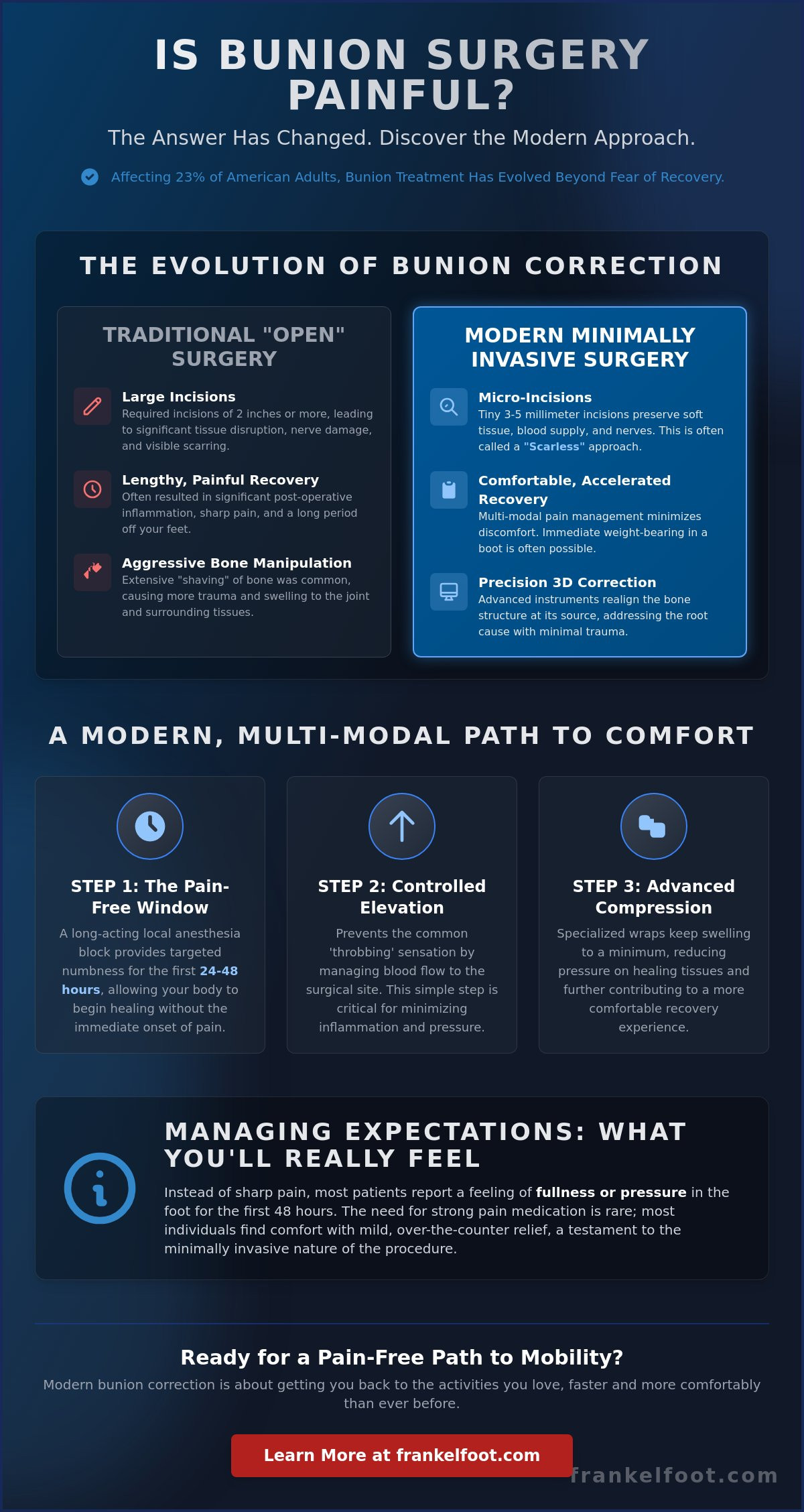
The primary difference in patient experience stems from the degree of surgical trauma. Traditional methods frequently required incisions of two inches or more, which severed nerves and disrupted blood flow. In contrast, modern techniques utilize micro-incisions measuring just 3 to 5 millimeters. This approach offers several benefits:
- Preservation of the surrounding soft tissue and blood supply.
- Reduced risk of infection and scarring.
- The use of advanced anesthesia blocks that provide targeted numbness for 24 to 48 hours after the procedure.
These long-acting blocks ensure a seamless transition into the initial recovery phase, allowing the body to begin healing without the immediate onset of sharp pain.
The Role of Surgical Precision in Patient Comfort
Precision is the cornerstone of a comfortable recovery. Specialized instrumentation now allows for bone realignment without the extensive "shaving" of the bone that once caused substantial inflammation. By focusing on structural realignment rather than just surface-level removal, we address the root cause of the deformity while minimizing trauma to the joint. This increased efficiency leads to reduced surgical times, which directly correlates with decreased post-operative swelling and a more predictable healing trajectory for every patient.
How Modern Podiatry Minimizes Discomfort During Recovery
Modern podiatry doesn't just manage pain after it occurs; it actively prevents it through a methodical, multi-modal approach. For many, the question of is bunion surgery painful is answered by how inflammation is addressed at its source. Our approach ensures a seamless journey from the initial consultation to the final follow-up. During a standard Bunion removal, the focus has shifted toward preserving the delicate neurovascular structures of the foot. By utilizing 'Scarless' techniques, surgeons minimize the initial tissue trauma that typically triggers a heavy inflammatory response. These smaller incisions lead to faster wound closure and significantly less nerve irritation. Early mobility is another cornerstone of modern recovery, where patients are often encouraged to walk in a protective surgical boot almost immediately. This progressive approach stimulates circulation and prevents joint stiffness. If you're concerned about the recovery timeline, exploring specialized foot pain relief options can provide clarity on your specific path to mobility.
A Step-by-Step Guide to a Comfortable Recovery
Effective recovery is built on a foundation of three critical steps designed to maintain patient comfort from day one. First, the long-acting local block provides a 'pain-free window' for the first 24 hours after surgery. Second, controlled elevation prevents the 'throbbing' sensation caused by blood flow to the surgical site. Finally, advanced compression using specialized wraps keeps swelling at a minimum, which is essential for reducing pressure on healing tissues.
Managing Expectations: What You'll Actually Feel
It's helpful to distinguish between sharp pain and the sensations of pressure or tightness. Most patients experience a feeling of fullness in the foot during the first 48 hours rather than acute distress. When people ask is bunion surgery painful, they're often relieved to learn that most individuals only require mild over-the-counter relief. This shift toward lighter medication profiles underscores the success of minimally invasive methodology in reducing systemic stress.
The Scarless and Painless Advantage at Frankel Foot & Ankle
At Frankel Foot & Ankle, our philosophy centers on a unique blend of authoritative clinical professionalism and patient-centered warmth. Across our specialized regional centers in Middletown, Katonah, and Milford, we recognize that surgical anxiety is a significant hurdle for many individuals. Deciding What to Do about Bunions often involves weighing the necessity of lasting relief against the fear of the procedure itself. We bridge this gap by providing a supportive environment where every concern is addressed with transparency and medical precision. Our team guides patients from the initial diagnostic consultation to full post-operative recovery with a focus on achieving lasting health improvements.
Our specific 'Scarless' technique represents a milestone in modern podiatric surgery. By achieving correction through portals so small they often don't require traditional stitches, we minimize the biological stress on the foot. When patients ask is bunion surgery painful, we explain that our methodology is specifically engineered to bypass the tissue trauma associated with legacy techniques. This allows us to provide comprehensive foot and ankle pain relief without the extended downtime or visible scarring that many people fear. Surgery shouldn't be scary.
Tailored Care in Middletown, Katonah, and Milford
Dr. Marc Frankel's approach combines sophisticated diagnostics with dedicated, compassionate guidance for every individual we serve. We don't believe in a one-size-fits-all model. Instead, we utilize advanced imaging to map out a precise surgical plan tailored to your unique bone structure. Choosing a local, specialized team means you receive care from professionals who know your recovery journey personally. This proximity ensures that follow-up appointments are convenient and that your transition back to normal activity is monitored with the utmost attention to detail.
Your Path to a Pain-Free Life Starts Here
True success isn't just about 'fixing a bump' on the side of the foot. It's about restoring your long-term mobility and improving your overall quality of life. We invite you to transition from being aware of the problem to being ready for a solution. For a deeper look at how we achieve these results, we encourage you to read our Pillar Guide to Scarless Bunion Surgery. Whether you're a runner, a busy professional, or someone who simply wants to walk without discomfort, our goal is to get you back on your feet quickly and with total confidence.
Reclaiming Your Active Lifestyle with Confidence
The evolution of podiatric medicine has fundamentally changed the patient experience, moving away from the trauma of legacy procedures toward the precision of minimally invasive correction. By prioritizing tissue preservation and utilizing advanced multi-modal pain management, we ensure that your recovery is as comfortable as it is effective. Understanding that the modern answer to the question, is bunion surgery painful, is rooted in progressive methodology allows you to focus on the ultimate goal: lasting relief and restored mobility.
Led by Dr. Marc Frankel, an authoritative expert in podiatric surgery, our centers are dedicated to providing specialized scarless and painless bunion correction. We take pride in serving the Middletown, NY; Katonah, NY; and Milford, PA communities with a philosophy that balances clinical excellence with genuine patient warmth. You don't have to let the fear of a difficult recovery keep you from the activities you love. Schedule your consultation for scarless and painless bunion surgery at Frankel Foot & Ankle Center today. We look forward to guiding you through a smooth, supportive path toward a pain-free future.
Frequently Asked Questions
Is bunion surgery more painful than other foot surgeries?
Modern minimally invasive bunion correction is generally no more uncomfortable than other common podiatric procedures. Historically, the trauma associated with large incisions and aggressive bone manipulation earned this surgery a difficult reputation. Today, because we utilize micro-incisions and precise realignment tools, the physiological impact is significantly lower than traditional open surgeries or complex reconstructive procedures that require extensive soft tissue disruption.
How long will I need to take pain medication after the procedure?
Most patients find they only require mild over-the-counter medication for approximately 2 to 3 days following their procedure. Because a long-acting local anesthetic block provides targeted numbness for the first 24 hours, you won't experience immediate post-surgical distress. This methodical approach to pain management ensures that the transition to home recovery is smooth and manageable for almost everyone we serve.
When can I return to work if I have a minimally invasive bunionectomy?
If your professional role is sedentary or office-based, you can often return to work within 3 to 7 days. Those in physically demanding positions that require standing or walking for long periods may need to wait several weeks to ensure the bone has stabilized properly. When discussing if is bunion surgery painful, it's important to realize that the modern recovery timeline is more about protection than managing acute discomfort.
Will I be able to walk immediately after the surgery?
Yes, one of the primary clinical benefits of modern correction is that most patients can walk out of the clinic in a protective surgical boot on the same day as their procedure. This early mobility is encouraged because it promotes healthy circulation and prevents joint stiffness. While you'll need to limit your activity level initially to allow for proper healing, you won't be confined to a bed or wheelchair for months.
What happens if I feel pain during the recovery process?
If you experience discomfort, it is typically managed through methodical elevation, icing, and compression. Most sensations of pain are actually caused by swelling and internal pressure rather than the surgical site itself. By elevating the foot above the heart and following our specific compression wrapping protocol, you can quickly alleviate these sensations. Our dedicated team provides compassionate guidance if any part of your recovery feels unexpected.
Is the 'painless' claim really true for every patient?
While every individual's physiological response is unique, the "painless" designation refers to the surgical experience and the substantial reduction of trauma compared to legacy methods. By utilizing portals as small as 3 to 5 millimeters, we bypass the nerve disruption that once caused severe post-operative distress. For the vast majority of our patients, the question is bunion surgery painful is answered with a sense of relief at how manageable the process truly is.


