


Imagine waking up in the middle of the night to a sensation so intense that even the light touch of a bedsheet against your toe feels like a crushing weight. This sudden, throbbing heat often signals the onset of Gout, a complex form of inflammatory arthritis that affected approximately 12.1 million adults in the United States according to 2018 data. When pain is this debilitating, it's natural to feel overwhelmed and confused about whether you're dealing with a severe bunion, a hidden injury, or a systemic medical issue.
We recognize that recurrent flares do more than just cause physical agony; they disrupt your career, your sleep, and your overall quality of life. You deserve a clear path from initial diagnosis to long-term stability. In this article, you'll learn how to identify specific symptoms and access the advanced clinical treatments available to patients in Middletown, Katonah, and Milford. We'll explore how modern "treat-to-target" strategies and urate-lowering therapies provide immediate relief while preventing the formation of permanent joint deformities known as tophi. By understanding the specialized podiatric care required for this condition, you can regain your mobility and protect your long-term health.
Key Takeaways
- Understand the biological mechanism behind inflammatory arthritis and why urate crystals primarily settle in the peripheral joints of the feet.
- Discover how advanced diagnostic techniques, ranging from joint fluid aspiration to specialized imaging, provide a clear diagnosis of Gout even when blood tests appear normal.
- Explore clinical treatment options that focus on achieving immediate reduction in inflammation and preventing the formation of permanent joint tophi.
- Learn to identify specific dietary triggers and hydration strategies that assist the kidneys in flushing uric acid to maintain long-term joint health.
Understanding Gout: Why It Targets the Feet and Ankles
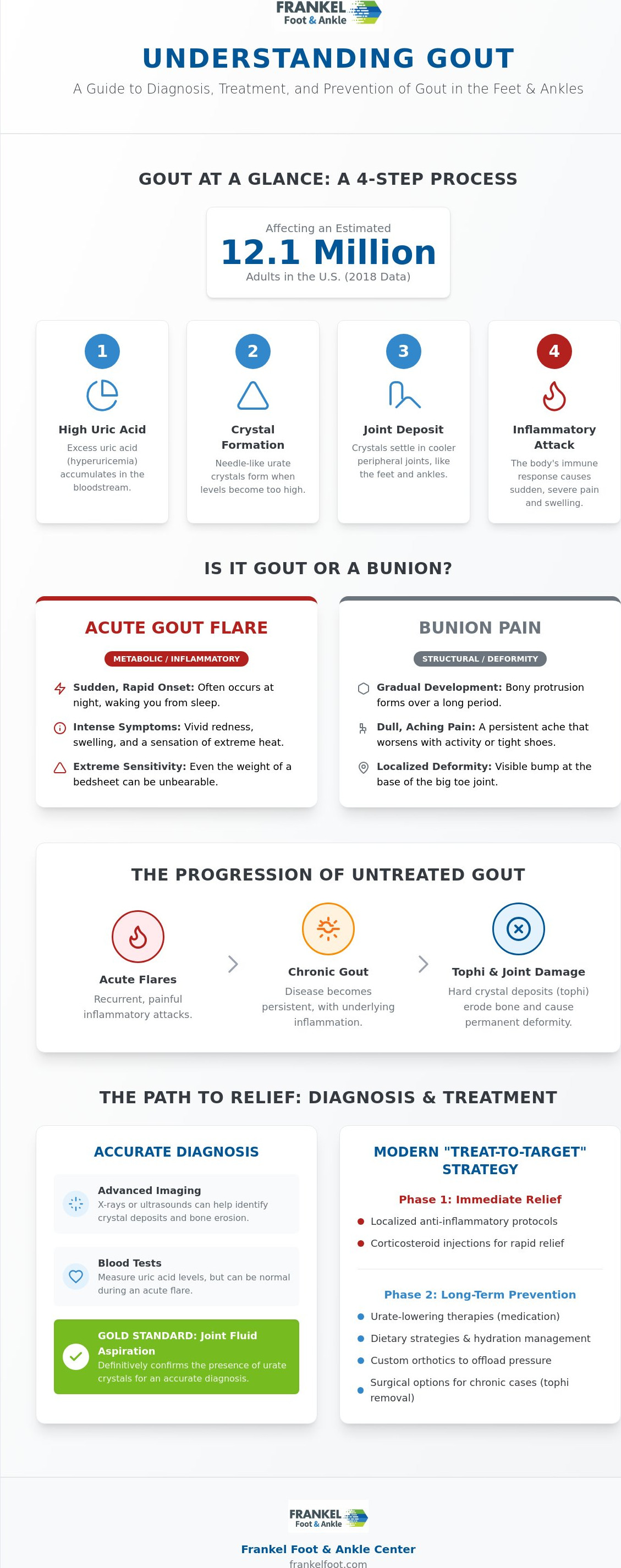
Gout isn't just a simple ache; it's a complex metabolic condition that manifests as a particularly painful form of inflammatory arthritis. It occurs when your body experiences hyperuricemia, a state where excess uric acid accumulates in the blood. When these levels become too high, needle-like urate crystals begin to settle in the joints. These crystals have a biological preference for the feet and ankles because these peripheral joints are cooler than the rest of the body, which encourages the crystals to precipitate and lodge in the joint space.
Many patients first experience what we call the "night attack." During sleep, your body temperature naturally drops and joint fluid is slowly reabsorbed, which increases the concentration of uric acid within the joint. This often results in a sudden, searing pain that can wake you from a deep sleep. While the initial flare may subside into an "intercritical" period where you feel completely normal, the underlying gout remains active and requires professional management to prevent future episodes.
Gout vs. Bunion: Identifying the Source of Your Pain
It's common for patients to confuse these two conditions, but the diagnostic markers are quite different. A bunion is a structural deformity characterized by a bony protrusion and a dull, persistent ache that worsens with activity. In contrast, an acute flare involves rapid onset, vivid redness, and a sensation of extreme heat. Distinguishing between Gout or Bunion? How to Tell the Difference is essential for choosing the right clinical path, as the treatment for a structural bone issue differs significantly from the management of a metabolic inflammatory event.
The Risk of Tophi and Permanent Joint Damage
If you leave these flares untreated, the disease can progress into a chronic stage marked by the development of tophi. These are hard, chalky deposits of urate crystals that form under the skin around the joints. Tophi are more than just a physical blemish; they can actively erode bone and destroy cartilage over time. Without specialized intervention, this progression leads to permanent joint deformity and a significant loss of mobility in the foot and ankle.
Clinical Diagnosis and Advanced Treatment of Gout Disease
Our clinical approach prioritizes diagnostic accuracy to ensure your recovery begins on a solid foundation. While a simple blood test is often the first step, it's a medical reality that serum uric acid levels may fluctuate or even appear normal during an acute attack. This happens as the body shifts uric acid from the bloodstream into the joint space. To achieve a definitive diagnosis, we often employ joint fluid aspiration to confirm the presence of urate crystals. This high-level diagnostic precision, paired with advanced imaging, allows us to differentiate Gout from other inflammatory conditions. Once confirmed, we implement localized anti-inflammatory protocols and corticosteroid injections to provide rapid foot pain relief.
Long-term management transitions from acute relief to systemic stabilization. We utilize sophisticated pharmaceutical protocols to lower urate levels, which effectively prevents new crystal formation. These therapies are carefully monitored to ensure they meet the specific needs of your metabolic profile. A comprehensive Gout diagnosis and treatment plan doesn't just stop the current pain; it aims to eliminate the threat of future flares entirely.
Podiatric Interventions for Chronic Gout
Chronic cases often lead to structural instability or the formation of large tophi. When conservative measures aren't enough, we offer specialized care for Foot Pain from Arthritis: Advanced Treatment and Relief in Middletown. Our surgical expertise extends from the removal of tophi to the repair of joint erosion to restore function. We focus on preserving the joint's integrity to prevent long-term disability and promote lasting mobility.
Custom Orthotics and Pressure Management
Mechanical support is a vital component of a comprehensive recovery plan. We design custom-molded orthotics to offload pressure from the first metatarsophalangeal joint to the surrounding soft tissues. By redistributing weight away from sensitive areas, these devices protect the big toe from further irritation during the walking cycle. This structural support is essential for maintaining mobility while your long-term medical regimen works to stabilize your health.
Managing Gout in Middletown: Long-Term Relief and Prevention
Long-term stability requires a proactive commitment to daily habits that influence your metabolic health. Central to this strategy is the "purine-low" diet, which involves identifying and avoiding specific triggers that elevate uric acid. You should be particularly mindful of shellfish and processed foods containing high-fructose corn syrup, as these are known to provoke inflammatory responses. Proper hydration is equally critical. By maintaining high fluid intake, you assist your kidneys in effectively flushing uric acid from your system, reducing the likelihood of crystal precipitation. Understanding Gout symptoms and treatment options empowers you to make these necessary adjustments before a flare begins.
While diet is a foundation, regular check-ups at a specialized podiatric center are essential for monitoring joint health. These visits allow us to detect subtle changes in your bone structure or joint function that might go unnoticed. Accessing local care in Middletown, Katonah, and Milford is especially important during sudden flares. When an attack occurs, having a trusted specialist nearby ensures you receive rapid intervention to mitigate pain and prevent lasting damage. Our expertise ranges from diagnostic precision to long-term preventative strategies, ensuring every aspect of your foot health is addressed.
Lifestyle Adjustments for Flare Prevention
Weight management plays a significant role in reducing the metabolic load on your body. Carrying excess weight often correlates with higher uric acid production, so achieving a healthy balance can significantly lower your risk profile. Additionally, it's wise to limit certain types of alcohol. Beer is particularly problematic because it contains high levels of purines and simultaneously interferes with the body's ability to eliminate uric acid through the kidneys.
Your Local Partner in Foot Health
At Frankel Foot & Ankle Center, we provide a compassionate, patient-centered approach to managing your recovery. We understand the stress of chronic pain and offer a supportive environment where your well-being is our primary focus. With convenient locations in Middletown NY, Katonah NY, and Milford PA, expert care is always within reach. Don't let inflammatory pain dictate your schedule. You can schedule your consultation for gout relief today to begin your journey toward lasting comfort.
A Clear Path Toward Lasting Relief and Mobility
Managing the intense discomfort of Gout requires more than just waiting for the flare to subside. It demands a sophisticated approach that integrates precise diagnostic imaging with specialized medical protocols to protect your joints from permanent erosion. By aligning metabolic management with expert podiatric care, you can move from the uncertainty of sudden attacks to a state of long-term stability and confidence.
At Frankel Foot & Ankle Center, we combine advanced technology with a compassionate, patient-centered philosophy. Led by Dr. Marc Frankel, our team utilizes specialized diagnostic tools to identify the exact nature of your pain and implement effective localized relief. Whether you visit us in Middletown, Katonah, or Milford, you'll find a dedicated partner committed to your recovery journey. You don't have to navigate this condition alone. We invite you to schedule a consultation at Frankel Foot & Ankle Center to secure your future mobility. We're here to help you regain your comfort and get back to the activities you love.
Frequently Asked Questions
How can I tell if I have gout or just a sore toe?
Gout is distinguished by a rapid onset of debilitating pain, intense localized heat, and vivid redness that makes even the weight of a bedsheet feel unbearable. While a typical sore toe often results from identifiable physical trauma or structural strain, an inflammatory flare feels like a sudden internal "fire" within the joint. If your toe is swollen, purple-red, and extremely sensitive to any pressure, you're likely experiencing a metabolic event rather than a simple mechanical injury.
What is the fastest way to stop a gout flare-up at home?
The most effective home intervention involves immediate rest, elevation of the affected limb, and aggressive hydration to assist your kidneys in processing uric acid. Drinking significant amounts of water helps dilute urate levels in the blood, while over the counter anti-inflammatory medications can provide temporary relief from the intense swelling. It's vital to avoid purine-rich foods and alcohol during this time, as these substances can exacerbate the inflammatory response and prolong the duration of your pain.
Can gout cause permanent damage to my feet if I don’t treat it?
Yes, untreated Gout frequently progresses from intermittent flares to chronic joint destruction and the formation of tophi, which are hard, chalky deposits under the skin. These urate crystals act as a constant abrasive force within the joint, leading to permanent bone erosion and the loss of protective cartilage. Without professional management to stabilize your uric acid levels, you risk irreversible structural damage that can severely limit your mobility and overall quality of life.
Why does gout always seem to hurt more at night?
Nocturnal flares occur because your body temperature naturally decreases during sleep, which encourages uric acid to precipitate into needle-like crystals within the cooler joints of your feet. Additionally, the gradual reabsorption of joint fluid while you're inactive increases the concentration of urate within the joint space. This combination of lower temperatures and higher crystal concentration creates the perfect environment for an intense, throbbing inflammatory response that typically peaks in the early morning hours.


