


What if the traumatic surgery you've been dreading no longer exists in modern podiatric medicine? If you're one of the 23% of adults living with these foot deformities, you've likely spent years managing chronic pain and hiding your feet. It's understandable to feel trapped between the persistent ache of a joint misalignment and the fear that a bunion operation will leave you bedridden for months. You deserve a clinical solution that respects both your need for physical relief and your desire for a swift return to daily life.
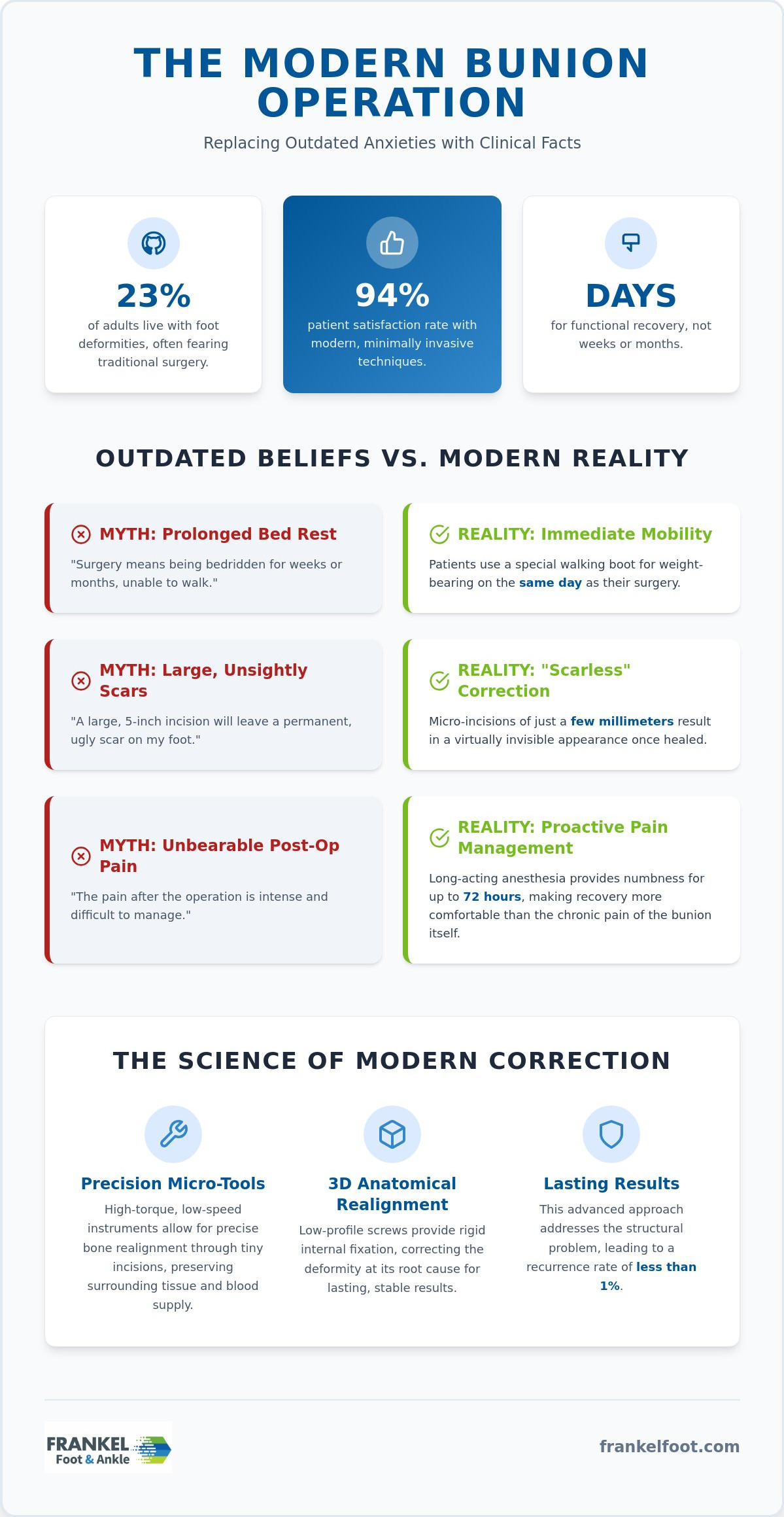
This 2026 guide replaces outdated anxieties with clinical facts, moving you from a place of uncertainty to a state of informed confidence. You'll discover how minimally invasive techniques have revolutionized patient outcomes, offering satisfaction rates as high as 94% according to recent medical analyses. We will examine five common myths regarding recovery and scarring, illustrating how modern care spans from precision diagnostics to advanced anatomical realignment. This overview provides a clear preview of modern 3D correction protocols that allow for immediate weight-bearing and nearly invisible results.
Key Takeaways
- Learn why modern surgical advancements allow for immediate weight-bearing, effectively debunking the myth that you'll be bedridden for weeks.
- Discover how specialized micro-tools facilitate a "scarless" bunion operation, leaving virtually no visible trace of the corrective procedure.
- Understand the clinical role of long-acting local anesthesia blocks in ensuring a virtually painless transition through the initial phases of recovery.
- Identify the essential credentials and specialized techniques to look for when selecting a dedicated foot and ankle expert in Middletown.
- Gain insight into how 3D correction protocols address the root cause of the deformity to provide lasting relief and prevent future recurrence.
Debunking the Top 3 Myths About the Modern Bunion Operation
Many patients hesitate to seek treatment because their understanding of a bunion operation is rooted in surgical techniques from thirty years ago. These "old school" methods involved significant bone disruption and extensive soft tissue trauma, which naturally led to prolonged recovery periods and visible scarring. Before deciding on a path forward, it helps to understand what is a bunion from a clinical perspective; it is a progressive structural deformity of the hallux valgus joint rather than a simple growth on the skin. The results of modern correction are transformative.
The Reality of Modern Recovery Timelines
The most persistent myth is that you'll be bedridden for weeks following your procedure. In 2026, the clinical standard of care has shifted toward immediate, protected mobility. Most patients now utilize specialized walking boots that allow for weight-bearing on the same day as their surgery. While full biological healing, which refers to the time required for bone to reach its peak structural integrity, follows a natural physiological timeline, functional recovery, defined as the ability to perform daily activities and walk independently, often occurs within days. This contrast is sharp when compared to the outdated six-month recovery windows of the past.
Why "Scarless" is the New Standard in Podiatry
The fear of an unsightly scar is a relic of traditional open surgery that required five-inch incisions. Modern podiatric medicine utilizes specialized micro-tools that require only microscopic entry points, often measuring just a few millimeters. By carefully choosing placement along the natural tension lines of the foot and utilizing advanced suturing techniques, surgeons ensure that the surgical site is virtually indistinguishable from the surrounding skin once healed. This transition from invasive "bump removal" to precise structural correction represents a significant leap in both aesthetic and functional outcomes.
Finally, the concern that post-operative pain is unbearable for most patients is no longer supported by modern data. The integration of long-acting local anesthesia blocks and minimally invasive techniques has revolutionized the immediate bunion operation experience. Patients frequently report that their discomfort is manageable and significantly less intense than the chronic joint pain they lived with for years. For individuals exploring these progressive options, Frankel Foot & Ankle offers expertise in these modern, patient-centered methodologies.
The Science of Scarless and Painless Bunion Correction
The modern bunion operation leverages high-torque, low-speed micro-tools that allow for precise bone realignment through tiny incisions. This methodology preserves the surrounding blood supply and soft tissues, which are often damaged in traditional open procedures. For a detailed look at the standard bunion surgery procedure, clinical resources highlight the shift toward these protective measures. By utilizing rigid internal fixation, such as low-profile screws that stabilize the joint in three dimensions, surgeons can now achieve results with a recurrence rate of less than 1% for advanced procedures.
How Minimally Invasive Techniques Minimize Pain
The "painless" protocol begins with long-acting local anesthesia blocks that numb the surgical site for up to 72 hours. This window is the most critical for your comfort. You'll move from a state of chronic joint inflammation to a controlled environment where pain is proactively managed with multi-modal anti-inflammatory protocols. If you're wondering, is bunion surgery painful?, the answer lies in these modern anesthetic advancements. They prioritize your immediate comfort and facilitate a much smoother transition into the healing phase.
Aesthetics and Function: Getting the Best of Both Worlds
While some clinical institutions suggest surgery isn't cosmetic, true structural health naturally results in a more aesthetic foot. By restoring the anatomical alignment of the first metatarsal, Dr. Frankel restores the natural, graceful contour of your foot. This dual focus ensures your bunion operation provides a result that looks as healthy as it feels. We believe you shouldn't have to choose between walking without pain and feeling confident in open-toed shoes. Residents in Middletown seeking this level of precision can consult with our specialized team to explore their options for lasting relief.
Patient satisfaction rates for these minimally invasive paths are remarkably high, typically ranging from 87% to 94%. This success stems from a philosophy that treats the foot as a complex, integrated system rather than just a collection of symptoms. By addressing the root cause of the deformity with stable fixations, we provide a foundation for long-term health and mobility.
Navigating Your Bunion Operation Journey in Middletown
Choosing the right environment for your bunion operation is as critical as the surgical technique itself. A general orthopedic exam often focuses on the bone in isolation; however, a specialized podiatric consultation considers the complex mechanics of the entire foot. This comprehensive approach ensures that the root cause of your discomfort is addressed, rather than just the visible bump. Many residents are discovering Scarless Bunion Surgery in Middletown: The Modern Path to Pain-Free Living, which highlights how localized expertise leads to superior long-term results. When considering the timeline for recovering from bunion surgery, it's vital to choose a provider who utilizes the latest fixation stability and pain-blocking protocols.
What to Expect During Your Initial Consultation
Your journey begins with a sophisticated diagnostic phase. We utilize high-resolution digital X-rays and detailed gait analysis to map the precise three-dimensional structure of your foot. This data allows for a highly customized bunion operation plan tailored to your specific anatomy. You should feel empowered to ask your podiatrist about their specific "painless" protocols and their direct experience with micro-incisional techniques. Preparing your home for recovery is simpler than in the past. Because modern methods often allow for immediate mobility, you won't need to arrange for weeks of full-time assistance or extensive home modifications.
Next Steps for Patients in Middletown, Katonah, and Milford
Accessing world-class foot care doesn't require a stressful trip to a crowded city hospital. Our specialized centers in Middletown, Katonah, and Milford provide a supportive, welcoming atmosphere where your well-being is the primary focus. Localized care means easier follow-up appointments and a more personal connection with your surgical team. If you're ready to move from chronic pain to active relief, we invite you to schedule a personalized foot assessment with our experts. Your path to a faster, more comfortable recovery starts with a conversation centered on your unique health goals and lifestyle needs.
Embrace a Future of Pain-Free Mobility
The journey from chronic foot pain to restorative health is no longer defined by long hospital stays or visible scarring. By choosing a modern bunion operation, you're opting for a clinical approach that prioritizes your comfort through micro-incisional techniques and long-acting anesthetic blocks. We've explored how 3D correction protocols address the root cause of the deformity, ensuring your results are as durable as they are aesthetically pleasing.
Dr. Marc Frankel and our dedicated team are here to guide you through every step of this progressive path. We provide specialized, patient-centered care at our local centers in Middletown, NY; Katonah, NY; and Milford, PA. You don't have to live with the embarrassment of a deformity or the limitations of persistent pain. It's time to reclaim your active lifestyle with confidence and ease. Your feet are the foundation of your well-being, and they deserve the highest level of specialized expertise.
Schedule Your Scarless Bunion Consultation at Frankel Foot & Ankle and take the first step toward lasting relief today. We look forward to supporting your transition to a more mobile, pain-free life.
Frequently Asked Questions
Is a bunion operation considered major surgery?
A modern bunion operation is typically performed as an outpatient procedure, meaning you return home the same day. While it technically involves skeletal realignment, the minimally invasive approach significantly reduces the systemic impact on your body compared to traditional major surgeries. Most patients find that the specialized micro-tools and local anesthesia blocks make the experience feel far less taxing than they initially anticipated during their clinical consultation.
How long after a bunion operation can I drive again?
Your ability to drive depends on which foot was treated and your reliance on narcotic pain medication. If your left foot was operated on and you drive an automatic vehicle, you may return to the road within a week once you've stopped taking prescription pain relievers. However, if the procedure was on your right foot, you'll generally need to wait several weeks until you can safely apply firm pressure to the brake pedal.
Will my insurance cover a scarless bunion operation?
Most insurance providers cover a bunion operation if it's medically necessary to resolve chronic pain or functional limitations. As of 2026, Medicare Part B typically covers 80% of the cost for these necessary procedures once the deductible is met. While "scarless" describes the advanced technique used, coverage is based on the structural deformity rather than the surgical method. Patients are responsible for their remaining coinsurance and any applicable deductibles.
What happens if I leave my bunion untreated instead of having an operation?
Ignoring a bunion often leads to a progressive worsening of the joint misalignment and an increase in daily discomfort. Over time, the shifting of the big toe can cause secondary issues such as hammertoes, bursitis, or advanced arthritis in the midfoot. Early intervention prevents these complications and ensures that the surgical solution remains as minimally invasive as possible before the structural deformity becomes too severe to manage with micro-tools.


